Do You Know God's Voice?

This year, we're collaborating with writers across the Augustine Collective, a network of student-led Christian journals, to bring you a series of short devotional articles during this season of Advent, the season of anticipation leading up to Christmas. Find this series also published by the Penn Epistle.
by frank fang
I used to think I did. Almost two years ago, around winter break, my grandmother was sick and in an Intensive Care Unit in China. My family and I flew to China to spend time with her for what could be her last moments. I remember sitting there and praying with her, clutching the Bible that I brought into the hospital. I felt a radiating, warm sensation around my temples. A muted brightness filled my vision through my closed eyelids. And the story of Hezekiah and his sickness in Isaiah 38 came to mind.
“Then the word of the Lord came to Isaiah: ‘Go and say to Hezekiah, Thus says the Lord, the God of David your father: I have heard your prayer; I have seen your tears. Behold, I will add fifteen years to your life’” [1].
A sense of peace settled within me. This must be God’s presence, I thought. She must have 15 more years of life… Excitedly and in very broken Mandarin, I told my family what had happened.
A few weeks later, my grandmother passed.
When it comes to big decisions and difficult seasons, I long for God’s voice and for certainty, but, oftentimes, upon praying, I hear and feel silence… or intrusive thoughts that may or may not be God. I know God is good, but given what happened to my grandmother, I wonder, how can I trust any perceived voice or feeling of God?
There are incredible stories in the Bible of God speaking directly to His servants. For instance, He audibly called Samuel as a child in the temple [2]. He spoke directly to Moses from a burning bush [3]. He came to Elijah in a “still small voice” [4]. Many of my friends say that God has directly spoken to them or their parents about what college they will attend, who they will marry, and so on. He has miraculously healed people, both in the Bible and in the present day, where accounts of these healings are not uncommon. However, for every single one of these miracles, there are countless others that are left as question marks, or an outcome is painful. For instance, in 2 Samuel 12, King David’s illegitimate son with Bathsheba is terminally ill, so David fasts and prays for the life of the child. And the child still dies [5]. This is a harsh punishment for David, and it seems unfair for a child to bear the consequences of his father’s mistakes.
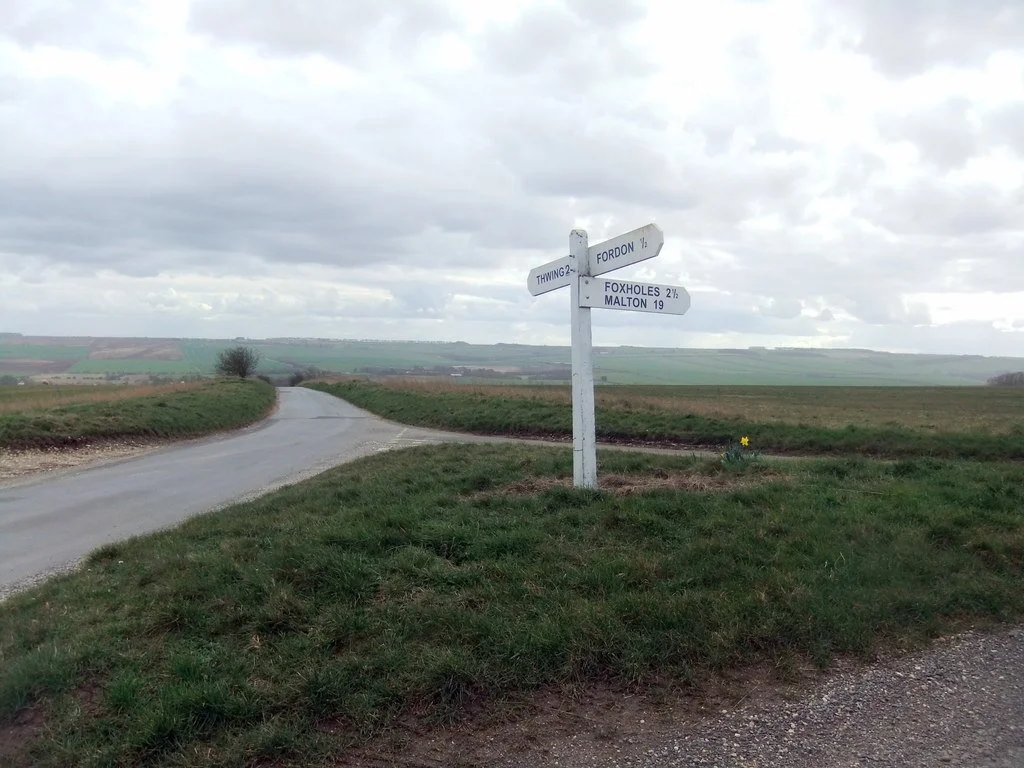
This year, I am a graduating senior, and I don’t know what I will do when May rolls around. I am once again at the crossroads of life, sitting before God with the hope to hear Him and find His will. Broadly, I know that He really doesn’t need anything from me, and that my entire purpose is to glorify Him. But, how, specifically, does He want me to do that?
I spent some of Thanksgiving break fasting and praying to seek His will for this next season. One morning, I carried my Bible and journal to one of Ithaca’s waterfalls and plopped down on a wet rock. Honestly, most of the time when I read the Bible, I feel like I am grasping at applications that I may just be making up. But that day, it was a bit different. As water droplets flecked onto me, I flipped to 1 Thessalonians 4. A friend in my Bible study had mentioned that passage a few days ago. I started reading. I got to verse 3.
“For this is the will of God, your sanctification…” [6].
I paused. This verse felt like a stake being driven into my chest slowly with each word I read. Is that it? Our sanctification as believers? Is this God speaking?
Although the rest of the verse and the surrounding verses speak about sexual immorality, those few words that have filled my mind since that morning.
This year, the first Advent theme of “hope” feels fitting as I am growing in my understanding of God’s voice. One of the Greek words most commonly used for “hope” in the Bible is ἐλπὶς (elpis), which means hopeful expectation with the sense of confidence of coming salvation. [7] This is different from our English definition of “hope,” which generally refers to wishing really hard for something like a career or a relationship. However, in this Advent season, we are reminded of the birth of our Savior, Jesus Christ, who died for our sins as a perfect sacrifice and was resurrected after three days so that we could share in His salvation.
My favorite passage about hope in the Bible is Romans 5:3-5:
“Not only that, but we rejoice in our sufferings, knowing that suffering produces endurance, and endurance produces character, and character produces hope, and hope does not put us to shame, because God’s love has been poured into our hearts through the Holy Spirit who has been given to us” [8].
Yes, I am still frustrated about how my grandmother passed and confused about the voice of God. I thought I had felt His presence and heard His voice through Scripture, but I was just wrong. I wish that never happened, and I’m quite reluctant to put a Scripture-laden Band-Aid on the situation. But, she was a believer. That is better than 15 more years in the grand scheme of eternity.
No, I still do not have any answers about what I will do next year. God has not given me any direct and practical answer. However, I do feel closer to knowing His voice again because through Scripture, I was reminded that God is in the process of sanctifying His children.
We know that He will come again, and the brokenness of this world will be restored. He will overcome sickness, death, and everything evil. I will be able to see my grandmother again in heaven because she believed in this, too. There is great hope in that. In the meantime, we will have confusing times of suffering, paired with what seems like silence from God. In this, though, we are becoming sanctified—and, in this sanctification, we are discovering hope.
Frank Fang 4th-Year biological engineering student at Cornell. He hopes to be a doctor someday.
Sources
[1] Isaiah 38:4-5, ESV
[2] 1 Samuel 3, ESV
[3] Exodus 3, ESV
[4] 1 Kings 19:11-12, ESV
[5] 2 Samuel 12:15-23, ESV
[6] 1 Thessalonians 4:3, ESV
[7] Strong’s Greek: 1680. ἐλπίς (ELPIS) -- Hope. Accessed December 4, 2025. https://biblehub.com/greek/1680.htm#:~:text=19%2C%20the%20Sept.-,2.,b.;%20Xenophon%2C%20Ages.
[8] Romans 5:3-5, ESV