Love Beyond Degree
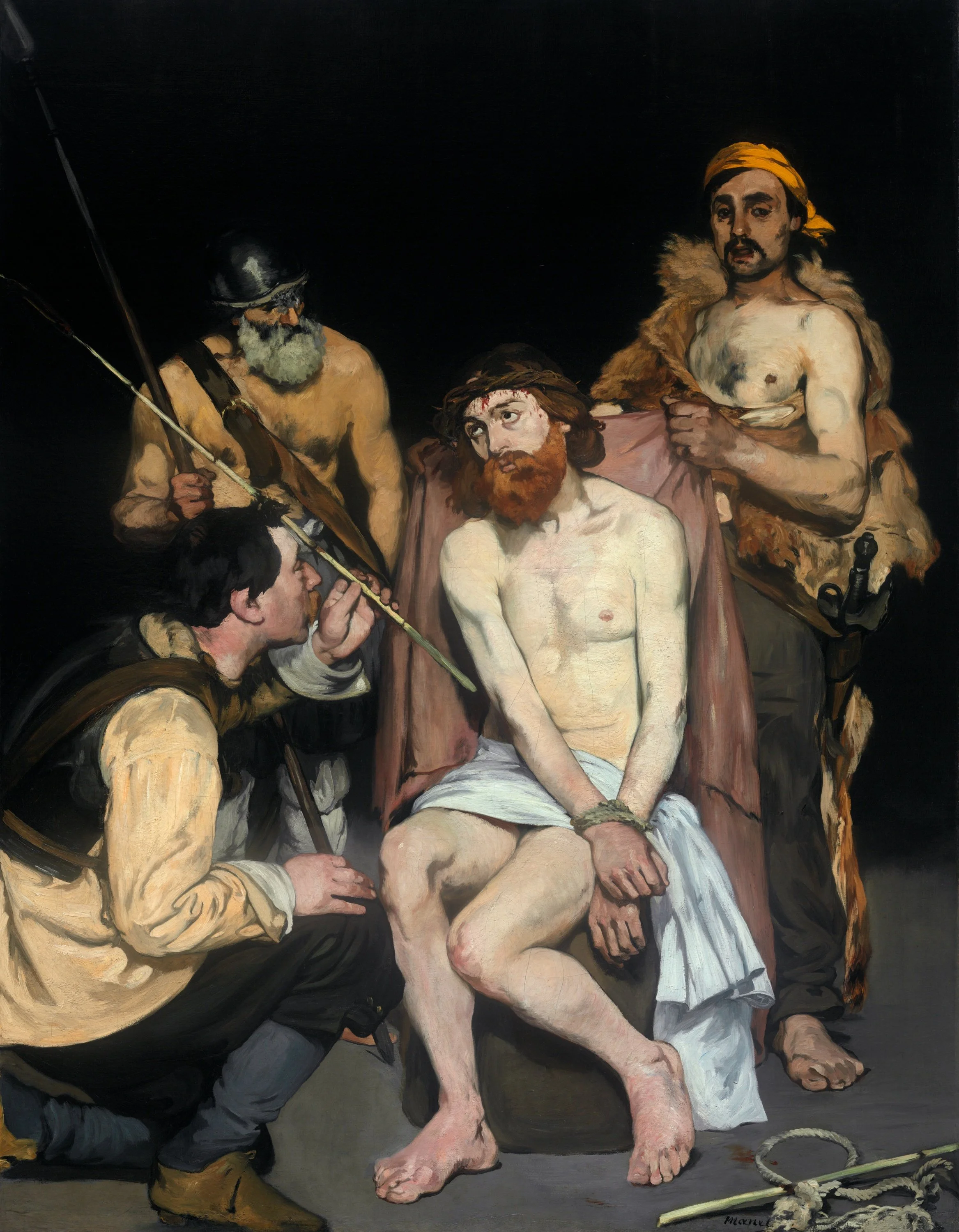
This year we're collaborating with writers across the Augustine Collective, a network of student-led Christian journals, to bring you a series of short devotional articles during this season of Lent, the 40-day period prior to Easter. Find this series also published by UChicago's CANA Journal and UC Berkeley's TAUG.
by sarah peter, university of chicago
During the Lenten season, as we inch closer to Holy Week, I look forward to resetting my music taste, reflecting on timely hymns and new songs — replacing the old wine skins of bad habits into fresh ones that remind me of God’s goodness (Luke 5:37-39). A recurring hymn I find myself at the feet of is “Alas, and Did My Savior Bleed” by Isaac Watts, an English congregational minister. Its tone is somber, its lyrics heavy, reminding me most of the sacrificial love of God that we do not deserve in which He “devoted that sacred head for such a worm as I.” In a culture that tends to place “the self” on a metaphysical pedestal that makes Watt’s hymn all the more powerful.
Love is patient and kind (1 Cor. 13:4). Such famous words from St. Paul are etched in tree trunks, wedding vows, and birthday cards, but amidst the phrase’s popularity, we ignore the highest love we received from God through His Son incarnate, the Word made flesh (John 1:14). As we move up the corporate ladder or pursue graduate programs, it is with this elevation of knowledge that puffs us up and turns our longing gaze inward. Our love for ourselves manifests in our lack-luster worship towards God. I tend to fail seeing how we are mere worms whose, as Watts writes, “drops of tears can ne'er repay the debt of love I owe.”
It is my prayer that we consider the fickleness of our heart’s desires and cling to the enduring, bearing, never-ending love of Christ (1 Cor. 13:7). As Paul pens earlier in the chapter, if I possess all knowledge, understand all mysteries, and wield prophetic powers, but “have not love, I am nothing,” (1 Cor. 13:2). Paul’s words may sound abrasive to our ears, yet he and Watts and Christians in general, in our humility knowing our status as mortal beings, find the most comfort in our Sovereign’s death upon that tree, knowing He died “for his own creature’s sin.” And what ought to be our response to such an act? In the face of His love, we Christians ought to devote ourselves to Him and say just as Watts poignantly writes, “Here, Lord, I give myself away; 'tis all that I can do.”
Sarah Peter is a third year at the University of Chicago studying Law, Letters, and Society, and Philosophy.